Banking on flexibility without losing ambition
Three of SHIFT’s clients, colleagues, and friends – Stefania Esposito (Westpac), Macayla Hughes (Kiwibank), and Larissa Vaughan (TSB) – are legal leaders at three of New Zealand’s major banks.
Like those on Emma McLean’s Part-Time Power List, they show why role models matter —proving you can build big careers while raising families, and bringing to life the mantra: you need to see it to be it.
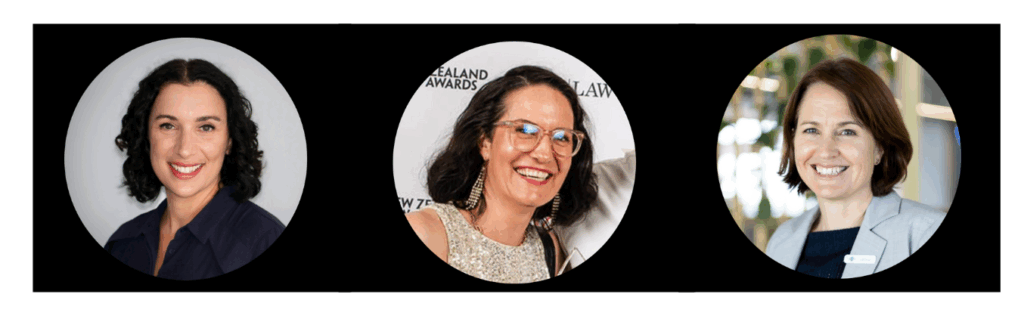
Tell me about you career journeys, were there any pivotal moments along the way?
- Stefania Esposito (General Counsel, Westpac)
I started in the public service, working for Jane Meares, an ex–Bell Gully partner, who became a real mentor. Later I worked in London in private hospital groups before returning to New Zealand and joining Westpac, where I’ve held a variety of roles. One pivotal moment was when a manager told me I had leadership potential — something I’d never considered, especially at a time when my youngest wasn’t sleeping and I felt I wasn’t doing well at home or at work. That conversation changed my perspective. - Macayla Hughes (General Counsel, Kiwibank)
I started in private practice but had several “sliding door” moments that altered the course of my career at various times. Falling into financial services in London was one. Another came after my first baby, when I was offered 3 days a week at a major bank running a big piece of litigation. That set a pattern: I worked part-time between children which worked really well for me in that period of my life when we were starting our family. A further turning point came during parental leave when my previous leader rang me out of the blue, asking if I was interested in doing a 12-week stint in retail banking. I said yes — and that phone call changed my career path. A number of years later, I’m still doing retail banking at Kiwibank, where we have a strong culture of supporting flexibility and part-time work. - Larissa Vaughan (General Counsel, TSB)
Like many, I started in private practice, but quickly saw the partnership model wasn’t sustainable for me. I moved in-house at a bank — the first of five I’ve worked for — and found I enjoyed being closer to the business. Later, I worked in the UK, and when I returned to New Zealand, I joined ANZ, staying for 10 years. That’s when I had children and began working part-time. In 2003, asking to go part-time felt like a risk, but ANZ supported me — and I was even promoted while working part-time.
How did you make flexibility, career growth, and raising a young family work in practice?
- Stefania
At Westpac, I’ve worked in many different arrangements: full time, four days a week, nine-day fortnights, adjusting as needed. My husband has also worked part-time since we had kids, always more so than me. We’ve constantly reassessed based on school, illnesses, workload, and family needs. There’s no single “flexible path” — it evolves. - Macayla
For about five or six years I worked part-time while having three children. My advice: be patient with yourself in that stage, but keep your hand in, stay across legislation, and maintain your network. At Kiwibank, many of our legal team work part-time, with hours flexing up or down depending on life. I agree with Stefania, there is no single path and it constantly evolves as your life moves through various stages. A workplace culture that embraces flexibility makes all the difference. - Larissa
I worked primarily part-time for about 10 years. Initially I thought it would stall my career, but it sharpened my skills — I had to prioritise, delegate, and focus where I added most value. At one point I was the most part-time lawyer in the team, yet managing the biggest team. Working flexibly can strengthen judgment and leadership.
What sort of informal or formal support or allyship did you get along the way?
- Stefania
My husband has been amazing. He and I split parental leave and have always had intentional conversations about our careers and parenting. He works early and does school pickups and activities. We’ve approached it as a team. - Macayla
Support came from people who trusted me to deliver, even part-time, and thought of me for opportunities when I was on parental leave. That confidence was key — and now, as a leader, I carry that forward when hiring. Recently I saw our Chief Executive openly ensure a meeting took place to accommodate a part-time team member’s availability. That leadership and tone from the top is important. - Larissa
ANZ offered parental leave top-ups and let me return part-time before it was common. My husband, a police detective, was the first male detective in Wellington to use flexible employment. From the start, we shared parenting evenly, which made a big difference.
How do you now, as leaders, encourage that culture of flexibility and inclusivity in your teams and wider organisations?
- Stefania
People need to see balance and flexibility working to believe it. At Westpac, CEO Catherine McGrath role models balance — no late-night emails, discouraging working while sick – and I try to do the same. - Larissa
At TSB, flexibility was already strong, and COVID accelerated the shift away from presenteeism. For me, it’s not just about gender — it’s about recognising employees are human beings with commitments outside of work. A human-centred approach is key. - Macayla
At Kiwibank, we use the “We, Me, KB” framework: does it work for the team, does it work for you, and does it work for the business you support? It’s about balancing all three. For me, it’s important to be open about our outside lives and understanding flexibility can take many forms. People want flexibility for lots of different reasons. Larissa’s “human-centred” approach is a nice way to approach it.
What advice would you give to people contemplating going part-time – for whatever reason – who worry it may hinder their career growth?
- Stefania
Being part time doesn’t have to hold you back and it doesn’t have to stop you building your career. If you want to lead and grow, make it known. Even if now is not the right time to grow, keep having career conversations. Sometimes what feels impossible now, whether it’s sleepless nights or a sick parent, may change in six months. - Macayla
Part-time didn’t hold me back. Keep having the conversations with your leader and network about your career goals and aspirations. More and more flexibility is being embraced and workplaces are supporting career growth for all their people, not just those who work full time. Find a workplace where flexibility is valued and your development is supported. The right cultural fit makes all the difference. - Larissa
Working part-time strengthened my leadership. It sharpened my ability to focus and manage effectively. Returning part-time keeps skills and networks alive, and your professional confidence intact.
SHARE THIS ARTICLE
SHARE THIS ARTICLE